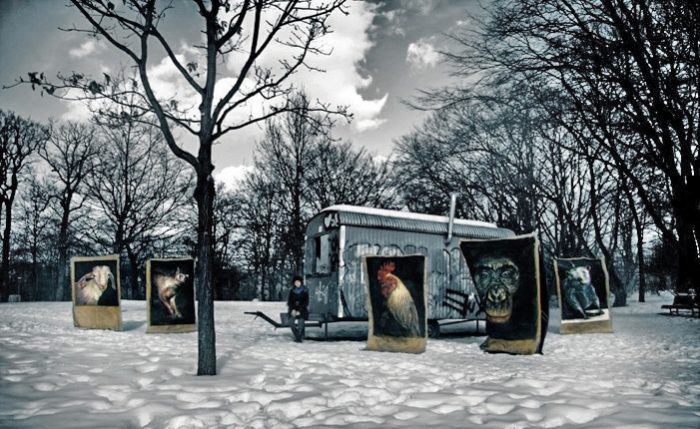
This Was Supposed to Be the Future nasce come una serie di dipinti su juta raffiguranti animali il cui rapporto con l’uomo è segnato da domesticazione, sfruttamento, sperimentazione scientifica e allevamento. Successivamente le opere vengono portate all’esterno e collocate nel Volkspark Hasenheide di Berlino, dove la loro presenza trasforma l’azione fotografica in una performance spontanea. Liberati simbolicamente dallo spazio espositivo, gli animali attraversano il paesaggio come presenze totemiche, restituendo alla natura corpi che l’uomo ha progressivamente sottratto al loro ambiente. I loro sguardi, profondamente umani, annullano la distanza tra le specie e invitano a riflettere sul rapporto ambiguo tra uomo e animale, immaginando un futuro in cui la loro presenza possa esistere oltre le logiche del possesso e dello sfruttamento.
This Was Supposed to Be the Future began as a series of paintings on jute depicting animals whose relationship with humans has been shaped by domestication, exploitation, scientific experimentation, and farming. The works were subsequently taken outdoors and installed in Berlin’s Volkspark Hasenheide, where their presence transformed the photographic action into an unplanned performance. Symbolically released from the exhibition space, the animals move through the landscape as totemic presences, returning to nature bodies that humanity has progressively removed from their original environment. Their deeply human gaze dissolves the boundary between species, inviting reflection on the ambiguous relationship between humans and animals while imagining a future in which their existence might extend beyond the logic of possession and exploitation.


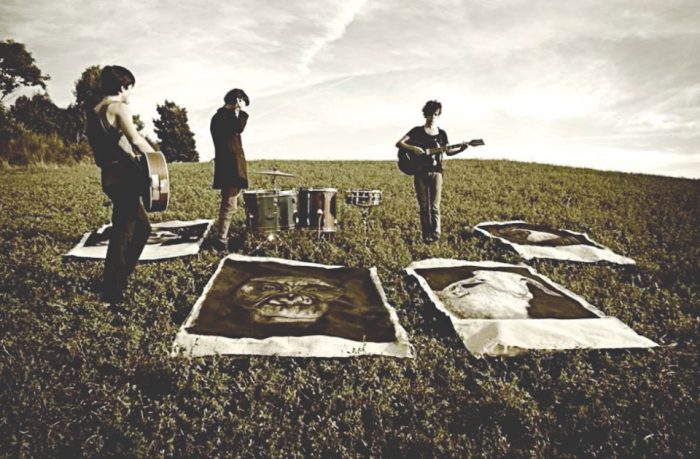
Le opere di questa serie sono presenti nel videoclip ufficiale e nel booklet dell’album
This Was Supposed to Be the Future dei Criminal Jokers (2010).
Works from this series are featured in the official music video and the booklet of
This Was Supposed to Be the Future, the debut album by Criminal Jokers (2010).